
La Prep Coming to Miami; New Retail Tenant for 777 Brickell Avenue

Written by & filed in Commercial, Development Pipeline, Retail.

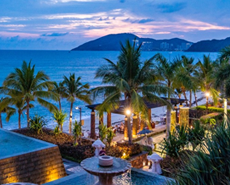
777 Brickell Avenue will have a new retail tenant soon. La Prep is slated to open once the building undergoes a small retrofit with street facing retail.  La Prep has over 50 locations in office towers, regional shopping centers and institutions such as universities and airports in Canada.   According to la Prep they are:

an innovative sandwich, salad, soup and assorted baked goods restaurant concept, also offering a wide variety of signature coffees.

Miami will be La Prep’s first store in the United States and will join Truluck’s as the ground floor retail tenants. This is great news for Brickell and it shows the strength of the Central Business District. Welcome to Miami!  777 Brickell is managed by CBRE.

Smackdown-County vs. City: Let’s Get Ready to Rumble Over Gated Communities!

Written by & filed in Cyclists & Pedestrians, Quality of Life, Urbanism.

Last night I attended the Belle Meade Homeowners Association Meeting at Legion Park. On the agenda was more discussion about the Belle Meade fence.  The Belle Meade HOA wants a fence on NE 6th Court in a desperate attempt to reduce crime in Belle Meade. This proposed fence would have gates that open and close, but in the future could possibly be locked.  Present at the meeting was Commander Morales of the MPD, who informed the residents of Belle Meade that the community only had 34 incidents of crime last year. These were mostly car break-ins and is a relatively low number of incidents. To put things in perspective Belle Meade has less incidents of crime than Coconut Grove.

The County (PWD) and State (FDOT) have objected to the fence with gates. Both say it is illegal because it impedes the public’s right of way. The City of Miami views the issue differently and has said it will begin construction of the fence shortly without the blessing of the County or the State.

A fence with holes will do absolutely nothing to make Belle Meade safer. I have yet to see any research that proves indisputably that gated communities are safer than non-gated communities. Most of the arguments used for the fence sound something like: “Something is better than nothing” or “It will make me feel safer”.  These arguments are not backed by any research or facts; just a false sense of security.

Sadly there is no discussion or drive to clean up Biscayne Boulevard-especially the prostitution and drugs that are being run out of the hourly hotels on Biscayne Boulevard. This is the source of the problem and only when this issue is addressed will we see a noticeable decline in crime in Belle Meade.  As long as we have crack heads and prostitutes living and working on the Boulevard a fence will not protect Belle Meade. We need to strengthen the entire neighborhood, not erect a fence in a desperate and futile attempt to reduce crime. This is simply wishful thinking. The best thing we can do is encourage redevelopment of the area, particularly of the hotels, of which many have fallen into decay.

The plan to revive the Vagabond Hotel is a perfect example of development that will make the entire neighborhood safer by encouraging more people to walk which directly results in more eyes on the street. If the Belle Meade HOA had their way, the entire community would be completely fenced off from the Upper Eastside neighborhood. Hardly anyone would walk to the Vagabond Hotel or any of the local businesses that depend so desperately on the disposable income of Belle Meade residents.  I would even argue that the fence would make things less safe for the Upper Eastside neighborhood as a whole because fewer people would be choose to walk.  We would see businesses suffer due to lack of pedestrian access to the Boulevard.  Once Belle Meade residents are in their cars and with parking on the Boulevard already a problem, residents may choose to take their business elsewhere.

In addition, a fence will only exasperate the parking problem for businesses along Biscayne Boulevard. We should encourage more people to walk, not force them to become even more auto dependent. For now I recognize that the fence will have gates, so it won’t discourage people from walking in the near future, but this is a first step in a larger strategy to put Belle Meade on “lock down”. There are high-hopes from the HOA Board that eventually the gates will be locked. This is a very misguided approach to reduce crime.

Belle Meade is setting a dangerous precedent. If the community successfully erects a fence, Morningside will be next to follow. Soon Miami will start looking like a prison of gated neighborhoods, do we want to be the Latin America of the United States? I encourage the County to remove the Coral Gate wall which was illegally erected several years ago with the approval of the City of Miami. In addition , the County should do everything in their power not to allow a Belle Meade fence to be built. At the end of the day it a complete waste of taxpayer monies and it will become the white elephant of Belle Meade and it won’t make my community any safer.

I personally hope the County and the State deliver a Smackdown or even a “superfly snuka” to the City and Belle Meade.  The fencing of Miami is wrong on so many levels.

Anyone know of a good attorney? I’m ready to take this to the highest court in the land.

New Urbanism and the Future of Real Estate Development in Brazil

Written by & filed in Urbanism.

This past weekend approximately 30 Brazilian real estate professionals traveled to Miami and attended a two-day New Urbanism seminar at the University of Miami.  The seminar was hosted by the School of Architecture’s Real Estate Development and Urbanism program and DPZ. The attendees are part of ADIT Brasil- an association of real estate development professionals led by Felipe Cavalcante, ADIT president.  The attendees had the opportunity to spend the weekend with some of Miami’s finest New Urbanists.

Andres Duany kicked-off the seminar by introducing traditional town planning principles and explained how they could be applied in Brazil, while still addressing many of the security and crime concerns that we in the United States do not have.  Mr. Duany compared the growth of Brazil to that of the United States 50 years go when Americans first began experimenting with suburban sprawl; an experiment which many argue has failed.  Mr. Duany went on to say that Brazil’s growth is unprecedented and that real estate professionals in attendance had the power to shape Brazil’s future development patterns. They could replicate America’s suburban sprawl or they could design vibrant, densely populated mixed-use towns that are less reliant on the automobile. The message was clear: don’t do as the United States has done-learn from our mistakes and build more vibrant communities.

Elizabeth Plater-Zyberk and Andres Duany then went on to speak about Coding Communities.  The couple spoke about their experience planning the first New Urbanist community in Seaside, Florida nearly 30 years ago. The existing zoning code did not allow for the development of a mixed-use community.  Fundamental to developing walkable, mixed-use communities is the need to have a smart zoning code in place that is guided by the principals of New Urbanism. Although not any easy task it is the backbone for smart growth.

Victor Dover, from Dover-Kohl & Partners, spoke about Sustainable Communities and the need to balance the environment within the context of each development. Galina Tachavia from DPZ acknowledged the security issues in Brazil and explained the need not to plan for today but for 30 years in the future. Gated communities in Brazil are a reality and will continue to be so for the foreseeable future until crime decreases. She suggested building hybrid gated communities which in the future could easily be disassembled if designed properly today.  This presentation resonated well with the Brazilian real estate professionals because it acknowledged the realities of their country today.

Maria Eliza Mercer, also from DPZ, presented in her native Portuguese about master Planning in Brazil and cited several examples of projects which DPZ is collaborating with partners in Brazil.

Lastly Dr. Bohl, Program Director of the Real Estate Development and Urbanism Program at the University of Miami, spoke about Commercial Real Estate and Urban Retail. Dr. Bohl cited several examples of successful New Urbanist developments in the United States and how they could be applied in Brazil. He also touched upon the synergy that is created in mixed-use developments and how the different uses (residential, retail office and hotel) support one another and add value to projects in terms of higher lease rates when developed properly.

On Saturday evening the group was invited to the DPZ office for cocktails and appetizers.  The feedback that I received from those in attendance was extremely positive. Hopefully the next generation of Brazilian developers won’t make the same suburban sprawl mistakes we made in the United States.  Brazil is growing at a tremendous rate and hopefully this growth can be managed appropriately by utilizing the principles of New Urbanism to guide this growth.

Unfortunately, I did not attend the second day of the seminar, but the following topics were presented on Sunday:

  •  Affordable Housing & Building Smart, Marianne Cusato & Tom Capp
  • Architecture, Sense of Place & the Town Architect, Steve Mouzon
  • Designing Public Space, Andre Georogiadis
  • Smart Engineering: Complete Streets and Light Imprint Rick Hall & Georgio Tachieve

The group then flew to Tallahassee for a two-day field trip to the following New Urbanist communities in Florida:

  • Seaside
  • Watercolor
  • Alys Beach
  • Rosemary Beach
  • West Palm Beach (City Place

MiMo Gem: Vagabond Hotel is Under Contract

Written by & filed in Development Pipeline, Historic Preservation, Market Watch, Urbanism.

This evening I attended the Belle Meade Homeowners Association at Legion Park where developer Avra Jain unveiled her plans to redevelop the historic Vagabond Hotel. Ms. Jain plans to restore the hotel and keep it as original as possible.  The hotel will have 50 rooms and she expects the ADR to be somewhere between $120-$150 depending on the season.  A restaurant and possibly a bakery would also anchor the hotel although this has yet to be decided. Construction is expected to last 6-months once the city approves the permits.

I can’t emphasize enough how important this project is to MiMo- it is a game changer for the entire neighborhood. The project will bring more people to MiMo and Biscayne Boulevard, which will in turn make the area safer and a more desirable place to invest. The Belle Meade HOA voted unanimously in favor to support plans for the redevelopment of the Vagabond Hotel.  Congratulations Avra and welcome to MiMo!